


Mobile Laboratory Versus Clinic: Which Fits?

A mobile laboratory versus clinic decision usually begins with a practical problem: the patient needs testing, but getting them to an appointment may require a wheelchair van, staff escort, family coordination, missed work, or clinical risk. For homebound, elderly, disabled, or medically fragile patients, transportation is not a minor inconvenience. It can delay the diagnostic information a care team needs to make the next decision.
A traditional clinic remains a valuable setting for many exams and follow-up needs. But on-site diagnostics can be the more efficient option when patients cannot travel safely, a facility needs multiple exams completed in one visit, or time-sensitive testing is needed outside standard office hours. The right choice depends on the patient, the ordered test, the care environment, and the urgency of the clinical question.
Mobile Laboratory Versus Clinic: The Operational Difference
A clinic asks the patient to come to the service. A mobile laboratory brings qualified diagnostic personnel and equipment to the point of care. That difference affects far more than convenience. It changes how quickly an order can be completed, how much coordination staff must manage, and how disruptive testing is for the patient.
At a clinic, the patient may need transportation, check-in, waiting-room time, transfer assistance, and a return trip. For a stable, ambulatory patient who already has an appointment nearby, that process can be entirely appropriate. Clinics can also be better suited for services that require fixed equipment, an in-person physician evaluation, or immediate access to a broader range of treatments.
With mobile service, diagnostics happen at a residence, skilled nursing facility, assisted living community, hospice location, shelter, correctional facility, or worksite. The patient stays in a familiar setting while the care team receives the ordered study or laboratory collection. This approach can reduce missed appointments and avoid the physical strain that travel places on vulnerable patients.
The key distinction is not whether one model is universally better. It is whether the care setting can support a timely, clinically appropriate exam without creating avoidable barriers.
When a Mobile Laboratory Is the Better Choice
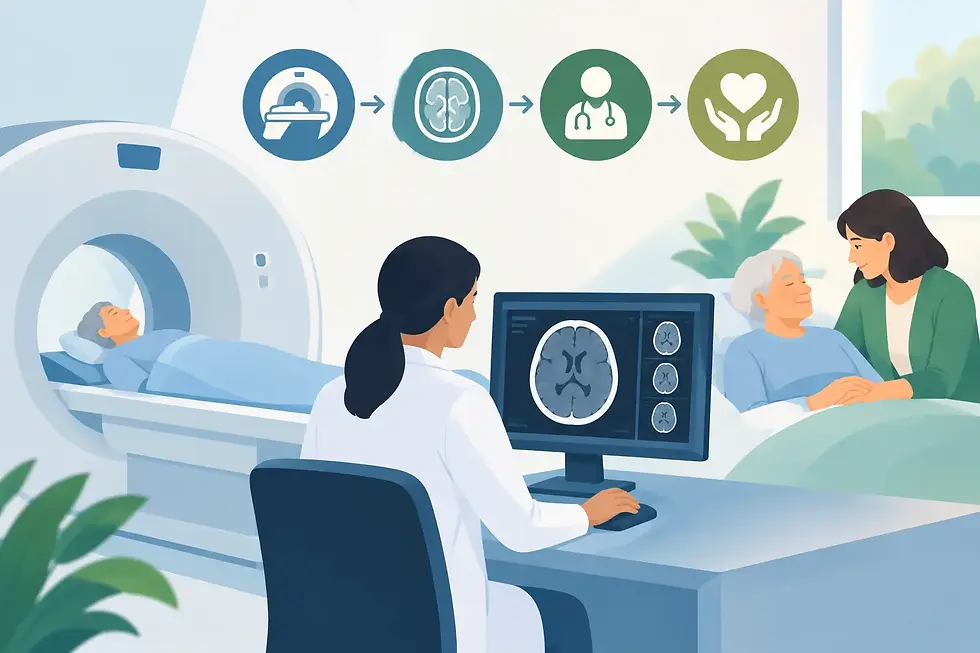
Mobile laboratory and imaging services are often most valuable when the challenge is access. A patient may be bedbound after hospitalization, dependent on oxygen, experiencing cognitive decline, recovering from surgery, or receiving hospice care. Moving that patient for a routine blood draw, chest X-ray, EKG, or ultrasound may require resources that are limited or unavailable.
For nursing facilities and home health organizations, sending several residents to outside appointments can consume a full day of staff time. It also introduces scheduling complications, transportation costs, and the possibility that an exam will be postponed because the patient is not ready to leave. On-site service allows facility teams to coordinate testing around medication passes, meals, therapy schedules, and patient comfort.
Mobile diagnostics also support faster action when an order is clinically urgent. A provider who needs an X-ray after a fall, an EKG for a new symptom, laboratory work to monitor treatment, or an ultrasound to investigate a concern may not want the patient waiting days for transportation and clinic availability. Rapid on-site dispatch can help the care team obtain information sooner while keeping the patient in place.
For organizations with multiple people needing services, mobile care can create a more controlled workflow. Industrial employers may need occupational testing. Shelters and correctional facilities may need chest X-rays or laboratory services without transporting large groups. In these situations, bringing services on-site can reduce logistical burden while supporting privacy and continuity of operations.
When a Clinic May Be the Better Fit
Mobile care has clear advantages, but it is not a replacement for every clinical setting. Some patients need a full office evaluation, a specialist consultation, advanced fixed-site equipment, or treatment immediately after the exam. If a patient has symptoms that suggest an emergency, emergency medical services or emergency department evaluation may be the appropriate path rather than scheduling a mobile exam.
A clinic can also make sense when the patient is mobile, transportation is reliable, and the service needed is already part of a scheduled provider visit. Combining an exam with a physician appointment may be more efficient than arranging a separate mobile dispatch.
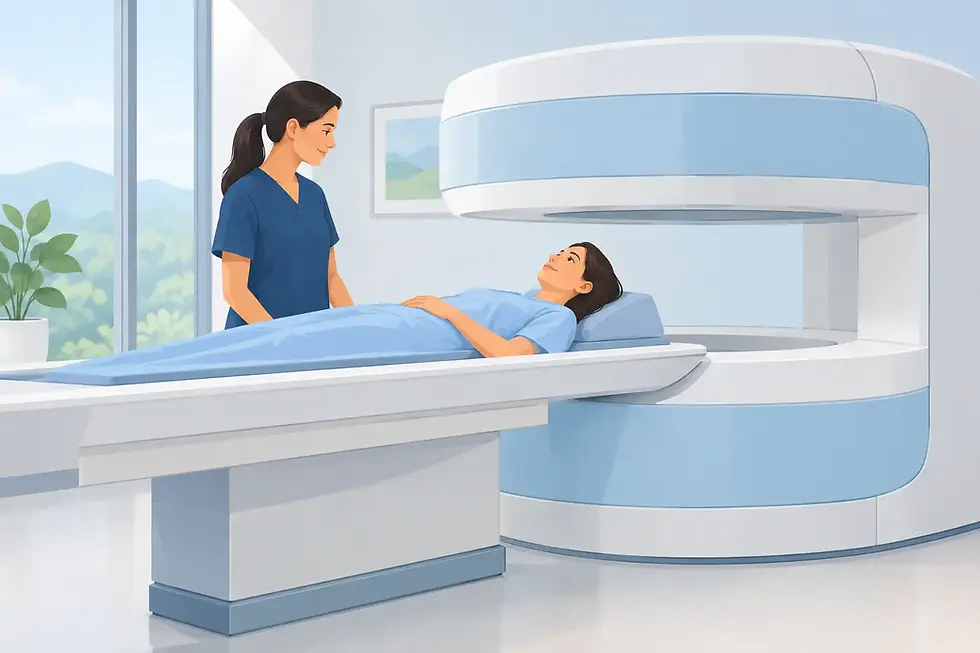
The ordered modality matters as well. Mobile providers can deliver a broad range of studies, including digital X-rays, laboratory blood work, EKGs, general and vascular ultrasounds, echocardiograms, bone density testing, ankle brachial index testing, fundus imaging, G-tube verification, and select MRI options. However, availability can vary by location, patient condition, order requirements, and the type of study requested. A care coordinator should confirm that the mobile provider can perform the exact service ordered and determine whether any preparation is required.
Clinical Quality Does Not Have to Depend on Location
The setting changes the workflow, not the need for clinical standards. Whether testing occurs in a clinic or at bedside, providers should expect qualified personnel, appropriate protocols, secure handling of patient information, and reliable reporting.
For laboratory services, this includes proper specimen collection, labeling, handling, and transport. For imaging, it includes correctly performed studies, clear digital image transmission, and interpretation by the appropriate radiology or cardiology professionals. Mobile service should never mean informal service. It should mean that the diagnostic process is organized to work where the patient is.
For facility leaders, compliance is part of the decision. Ask whether the provider maintains applicable credentials and follows HIPAA requirements. Confirm how orders are received, how results are delivered, and who has access to the information. Digital provider portals can be especially useful because they allow authorized clinicians to review images and results without waiting for physical media or paper records to move between locations.
D-RAD Mobile Imaging provides on-site diagnostic imaging and laboratory services with HIPAA-compliant workflows and CLIA-certified laboratory capabilities, helping care teams coordinate testing where patients live and receive care.
Speed Is More Than a Convenience Metric
When administrators compare mobile laboratory versus clinic options, turnaround time should be measured from the moment the provider recognizes a need, not simply from the time an exam begins. A clinic appointment may appear quick on paper but still involve hours or days of coordination before the patient reaches the site.
Mobile service can remove several steps from that timeline. There is no transportation pickup to arrange, no transfer into a vehicle, no off-site waiting room, and no return trip before the facility can resume its normal routine. For a fragile patient, fewer transitions can also mean less anxiety, less fatigue, and lower exposure to the risks associated with travel.
Speed still needs to be matched to the clinical situation. A routine monitoring lab may be scheduled efficiently around the patient’s care plan. A new acute concern may require a faster response or escalation to emergency care. Clear communication between the ordering provider, facility staff, patient or caregiver, and mobile diagnostic team keeps expectations aligned.
Questions to Ask Before Ordering On-Site Testing
A strong mobile diagnostic partner should make the ordering process straightforward, but the care team should clarify the essentials before dispatch. First, confirm the exact order and diagnosis information needed for the study. Next, identify any patient preparation, mobility limitations, infection-control considerations, or equipment needs at the location.
It is also useful to confirm service coverage, scheduling availability, result delivery method, and whether the exam can be performed at the requested location. For after-hours needs, ask how urgent requests are triaged and what response window is realistic. If insurance or billing is part of the arrangement, establish the required documentation before the visit whenever possible.
Facility teams can improve results by preparing a quiet, accessible space and ensuring the patient, caregiver, or responsible staff member is available. For private-home visits, caregivers can help by having the order, medication information, insurance details, and a clear path to the patient ready before the technologist arrives.
Choose the Setting That Protects Access to Care
The best diagnostic pathway is the one that gets the right test completed safely, correctly, and without unnecessary delay. For an ambulatory patient with easy clinic access, a traditional appointment may be the simplest solution. For patients who are homebound, medically fragile, difficult to transport, or living in a facility, mobile diagnostics can turn a difficult process into a manageable part of care.
When the next order is written, consider the full journey required to complete it. If transportation, staffing, or patient condition stands between the order and the answer, bringing diagnostic services to the bedside may be the most practical way to keep care moving.

Comments