

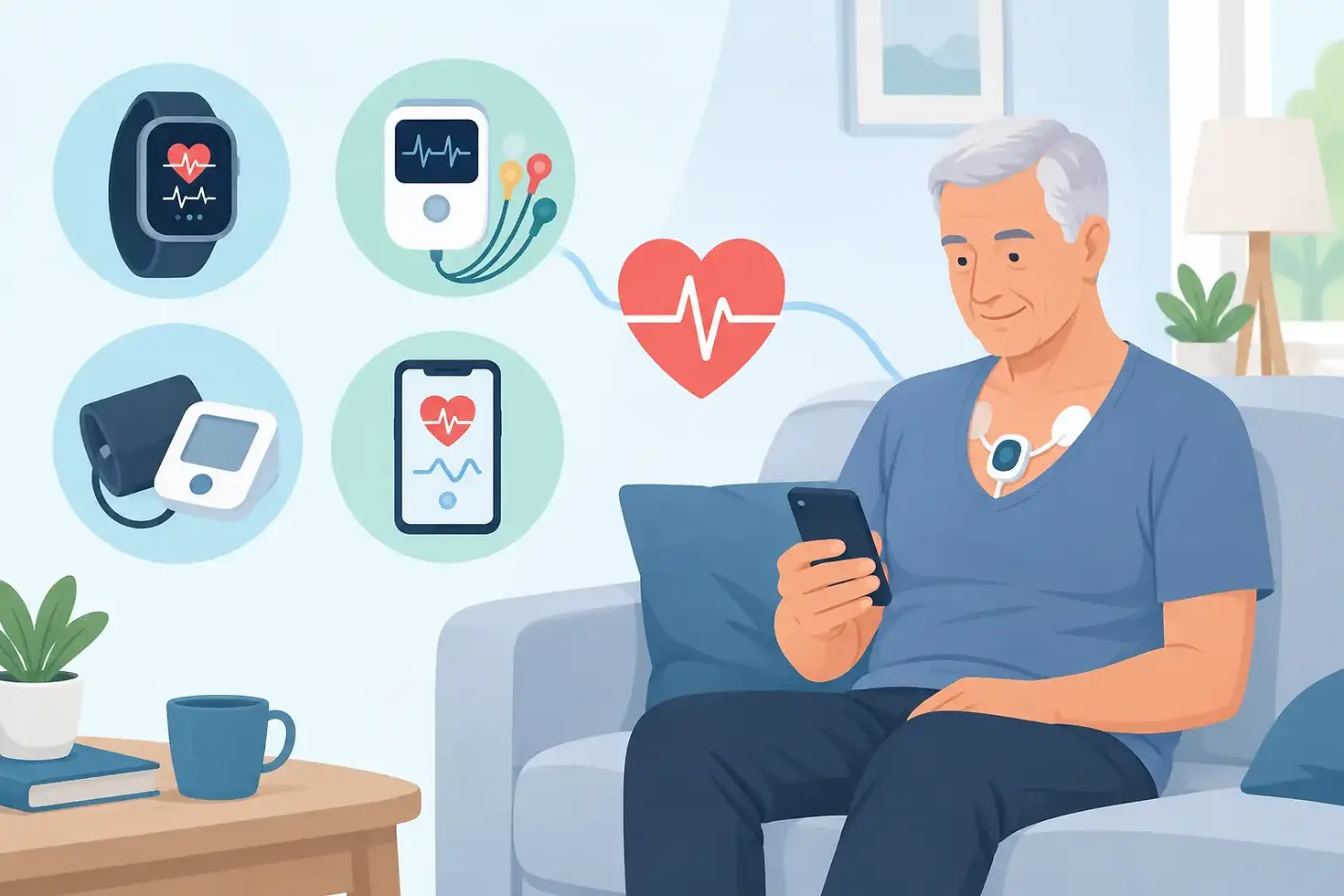
Best Cardiac Tests for Home Care Patients

A homebound patient develops new shortness of breath, ankle swelling, dizziness, or an irregular pulse. Waiting for transportation to an outpatient center can delay clinical decisions and place unnecessary strain on the patient, caregiver, and care team. Selecting the best cardiac tests for home care means matching the right exam to the patient’s symptoms, diagnosis, and immediate care needs - then obtaining it where the patient is.
For home health agencies, hospice teams, assisted living communities, skilled nursing facilities, and private caregivers, mobile cardiac diagnostics can reduce avoidable transfers while supporting timely physician evaluation. The test itself is only part of the solution. Reliable service requires a clear order process, qualified technologists, secure result delivery, and rapid escalation when findings require prompt attention.
Best Cardiac Tests for Home Care: Start With the Clinical Question
There is no single “best” cardiac test for every home care patient. An EKG may be the fastest and most useful exam for a patient with palpitations or suspected rhythm changes. An echocardiogram provides a more detailed view when heart failure, valve disease, or reduced cardiac function is a concern. Vascular studies and ankle-brachial index testing may be appropriate when circulation problems affect the care plan.
The ordering provider should define what needs to be answered. Is the concern a new arrhythmia? Worsening congestive heart failure? Leg pain with walking, nonhealing wounds, or possible poor arterial circulation? A focused clinical question helps the mobile diagnostic team schedule the appropriate modality and helps the interpreting physician deliver a report that supports next-step decisions.
EKG for Rhythm, Rate, and Acute Symptom Evaluation
An electrocardiogram, commonly called an EKG or ECG, records the heart’s electrical activity. It is often the first-line cardiac test when a patient reports chest discomfort, palpitations, dizziness, syncope, weakness, or a noticeably irregular pulse. It may also be ordered to monitor known atrial fibrillation, medication effects, or changes in a patient with cardiac history.
For home care operations, the key advantage of an on-site EKG is speed. The patient can remain in bed, in a recliner, or in their familiar care setting while the study is performed. Digital tracings can then be made available to the ordering provider for review, helping the care team determine whether to adjust treatment, arrange a same-day evaluation, or activate emergency services.
An EKG has limits. It offers a brief recording rather than continuous monitoring, and it does not show the heart’s structure or pumping function. A normal EKG also does not rule out every serious cardiac condition. New chest pressure, severe shortness of breath, fainting, stroke-like symptoms, or other signs of a medical emergency require immediate emergency evaluation rather than waiting for a routine mobile test.
Echocardiogram for Heart Structure and Function
An echocardiogram uses ultrasound to create images of the heart. It can evaluate chamber size, heart muscle movement, ejection fraction, valve function, fluid around the heart, and other structural findings. For patients with heart failure, known valve disease, cardiomyopathy, persistent edema, unexplained fatigue, or worsening dyspnea, an echocardiogram can provide information an EKG cannot.
This test is especially practical for medically fragile patients who struggle with transportation, oxygen needs, mobility limitations, dementia, or advanced illness. Instead of coordinating a vehicle, transfer assistance, and prolonged waiting room time, the study can be completed on-site and sent for professional interpretation.
Timing still matters. An echocardiogram is valuable for evaluating cardiac function, but it is not a substitute for emergency treatment when a patient is unstable. Care teams should communicate current vital signs, symptoms, oxygen requirements, and relevant cardiac history when placing the order. That context helps determine whether bedside diagnostics are appropriate or whether a higher level of care is needed first.
Vascular Ultrasound for Circulation Concerns
Not every cardiovascular concern begins with chest symptoms. Leg swelling, pain, skin discoloration, ulcers, cold feet, or diminished pulses may point to venous or arterial circulation issues. General and vascular ultrasound studies can help providers evaluate blood flow and support decisions involving wound care, edema management, vascular referral, or follow-up treatment.
The exact study depends on the clinical concern. Venous studies may be used when swelling or other symptoms raise concern for venous disease. Arterial studies may be considered for suspected peripheral arterial disease, especially when foot wounds are slow to heal or pain occurs with activity. The ordering provider should specify the symptoms, body part, and reason for the examination to prevent delays and ensure the correct protocol is performed.
Ankle-Brachial Index for Peripheral Arterial Disease Screening
An ankle-brachial index, or ABI, compares blood pressure readings at the ankle and arm to assess lower-extremity arterial circulation. It is a useful tool for patients with diabetes, smoking history, leg pain, nonhealing wounds, diminished pulses, or suspected peripheral arterial disease.
ABI testing can be particularly helpful in long-term care and home health settings, where clinicians are managing skin integrity and trying to determine whether reduced arterial flow may affect wound healing. Results should be interpreted alongside the patient’s symptoms, physical assessment, and medical history. An abnormal ABI may lead to additional vascular evaluation, while a normal result does not eliminate every possible cause of leg or foot symptoms.
Choosing a Mobile Cardiac Testing Partner
A home care organization needs more than an available appointment. It needs a diagnostic partner that fits real clinical workflows. Before requesting service, confirm which modalities are available on-site, what information is needed for an order, how quickly the exam can be scheduled, and how results are returned to the ordering provider.
For time-sensitive cardiac testing, secure digital access to images and reports can reduce administrative delays. HIPAA-compliant workflows matter because patient information must move safely between the facility, mobile provider, interpreting clinician, and ordering practitioner. Facilities should also verify applicable credentials, quality processes, and whether the provider can support the patient population and geography they serve.
D-RAD Mobile Imaging brings EKGs, echocardiograms, vascular ultrasounds, ABI testing, laboratory services, and other diagnostic modalities directly to point-of-care settings. This approach supports organizations that need responsive testing for homebound, elderly, disabled, or medically complex patients without adding the burden of transportation.
Build the Order Around the Patient’s Current Status
A complete order prevents back-and-forth calls and helps the diagnostic team arrive prepared. Include the patient’s identifying information, ordering provider details, requested test, diagnosis or symptoms, relevant medical history, and contact information for receiving results. For an echocardiogram, prior cardiac history and the reason for the study are especially useful. For an EKG, document symptoms, known rhythm conditions, and whether the patient is experiencing a change from baseline.
Care teams should also prepare the environment. Confirm the patient’s location, mobility needs, infection-control precautions, oxygen use, and whether a caregiver or facility staff member should be present. A quiet space with access to the bedside or chair is often enough for mobile testing, but clear communication helps avoid delays.
When results are received, assign responsibility for review. The ordering provider or designated clinician should know where reports will be delivered and how urgent findings will be communicated. A test that sits unread in an inbox does not improve care.
When Home-Based Testing Is the Right Choice
Mobile cardiac diagnostics are well suited to planned evaluations, follow-up monitoring, chronic disease management, and patients whose transportation barriers create meaningful delays. They can also support facility-based care by reducing disruptive off-site trips and allowing staff to maintain continuity around medications, meals, mobility assistance, and family communication.
The right choice depends on acuity. A stable patient with increased edema and a provider order for an echocardiogram may benefit from on-site testing. A patient with active crushing chest pain, severe respiratory distress, altered mental status, or collapse needs emergency response. Strong home care programs make this distinction early and do not allow the convenience of mobile service to postpone emergency care.
For care teams, the practical goal is straightforward: obtain the cardiac information the provider needs without creating a transportation crisis for the patient. When the test, timing, and communication pathway are aligned, bedside diagnostics can keep care moving where it belongs - around the patient’s real needs.


Comments