

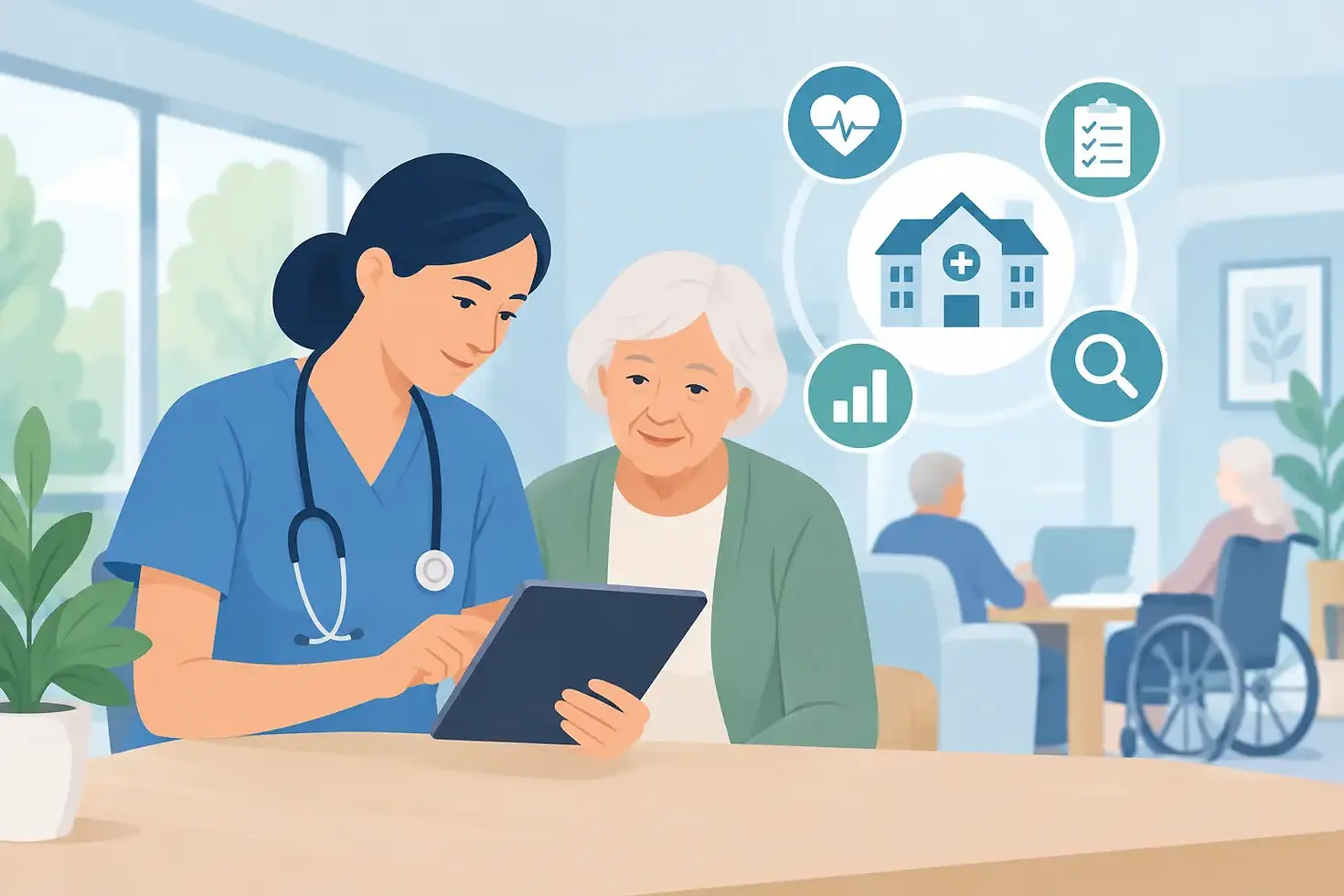
A Nursing Facility Diagnostics Case Study

At 7:15 a.m., a skilled nursing facility has three residents who need diagnostic testing: one with new shortness of breath, one with possible pneumonia, and one whose feeding tube may have shifted overnight. This nursing facility diagnostics case study examines the operational problem behind those orders and how bedside diagnostics can help the care team act without adding an ambulance trip, a long wait, or further stress for medically fragile residents.
This is a representative case study based on common skilled nursing facility workflows. Every resident, order, and clinical decision requires individual physician oversight and should follow the facility's policies, payer requirements, and established standards of care.
The Facility Challenge: Urgent Orders, Limited Mobility
The facility in this example is a 120-bed skilled nursing community caring for residents with high-acuity needs. Many require wheelchairs, oxygen, two-person transfers, behavioral support, or close monitoring during transport. When a provider orders a chest X-ray, EKG, ultrasound, or laboratory work, the clinical need may be straightforward. Completing the order often is not.
Traditional off-site testing can require staff time to coordinate transportation, prepare records, notify family, arrange escorts, and manage medication or meal schedules around an appointment. A resident may spend hours outside the building for an exam that takes minutes to perform. For residents with dementia, respiratory compromise, fall risk, or limited tolerance for change, that disruption can be clinically meaningful.
The facility's leadership had another concern: diagnostic delays can complicate care coordination. A provider may need imaging or lab findings before changing treatment, determining whether a resident can remain in the facility, or deciding whether a higher level of care is necessary. If results are delayed, the team may be left monitoring symptoms without the information needed to make a confident next move.
Nursing Facility Diagnostics Case Study: The On-Site Workflow
The facility adopted an on-site diagnostic workflow for ordered services that could be performed at the bedside or in a designated clinical area. Its goal was not to replace emergency services or hospital evaluation when those were necessary. The goal was to make routine and time-sensitive diagnostics more accessible for residents who could safely be evaluated in place.
At the start of each shift, nurses reviewed new orders, changes in condition, and pending follow-up needs. Orders were sent through the facility's established process with complete patient demographics, the ordering provider's information, diagnosis or clinical indication, and any required signatures. Complete orders mattered. They reduced avoidable calls back to the unit and helped the diagnostic provider dispatch the right modality and qualified professional.
For the three residents identified that morning, the facility requested a mobile chest X-ray, G-tube verification, and laboratory blood work. The charge nurse grouped practical information before the mobile team arrived: room locations, isolation precautions, mobility status, oxygen needs, family concerns, and the best staff contact for the visit. This preparation was simple, but it prevented unnecessary interruptions once testing began.
A qualified mobile technologist arrived with the required equipment and coordinated directly with the nursing staff. The chest X-ray was completed in the resident's room with attention to positioning and comfort. The G-tube verification exam was performed according to the order and established protocol. Laboratory specimens were collected on-site, labeled and handled for processing.
For facility staff, the difference was immediate. No resident left the building. No transportation vendor had to be scheduled. Nurses remained available to the rest of the unit rather than spending a large portion of the day coordinating an outside appointment. Most importantly, the residents received needed testing in a familiar setting with caregivers nearby.
What Changed for the Clinical Team
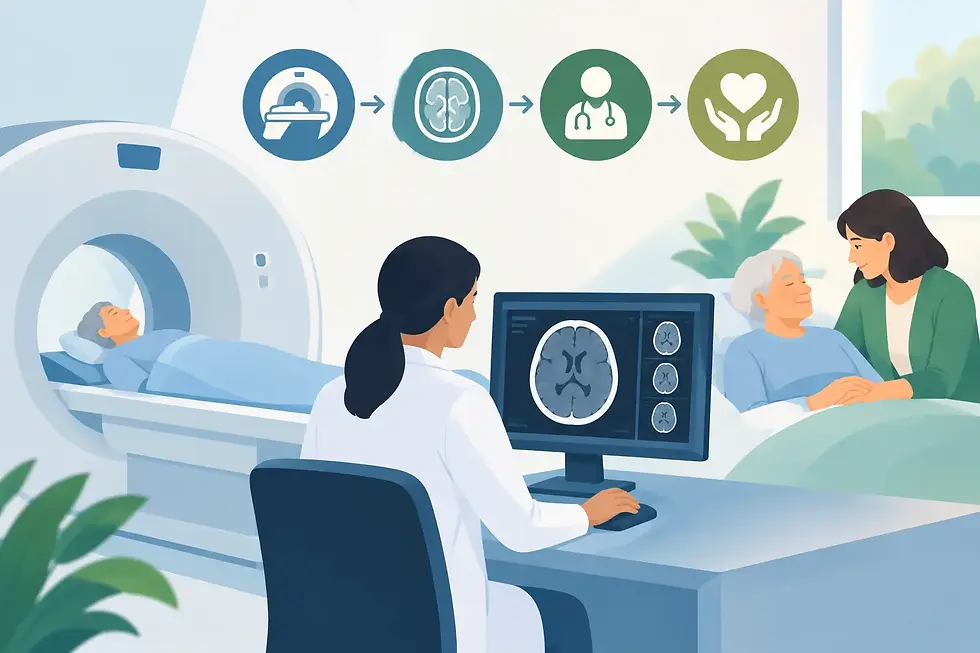
On-site diagnostics do not eliminate the need for clinical judgment. They improve access to the information that judgment depends on. In this case, digital imaging was made available to the ordering provider through a secure workflow, with formal interpretation provided by the appropriate reading professional. Laboratory results followed the applicable processing and reporting process.
The provider reviewing the chest X-ray had information to consider alongside the resident's vital signs, respiratory assessment, medication history, and goals of care. The G-tube result helped guide the next step before use of the tube. The laboratory order supported evaluation of the third resident without creating another disruptive trip.
That distinction is important. A mobile diagnostic service provides the ordered exam and a reliable results pathway. The facility and ordering provider remain responsible for recognizing emergencies, escalating symptoms, and acting on results. If a resident has acute distress, unstable vital signs, altered mental status, uncontrolled bleeding, signs of stroke, or another emergent condition, emergency protocols should take priority over waiting for a mobile service.
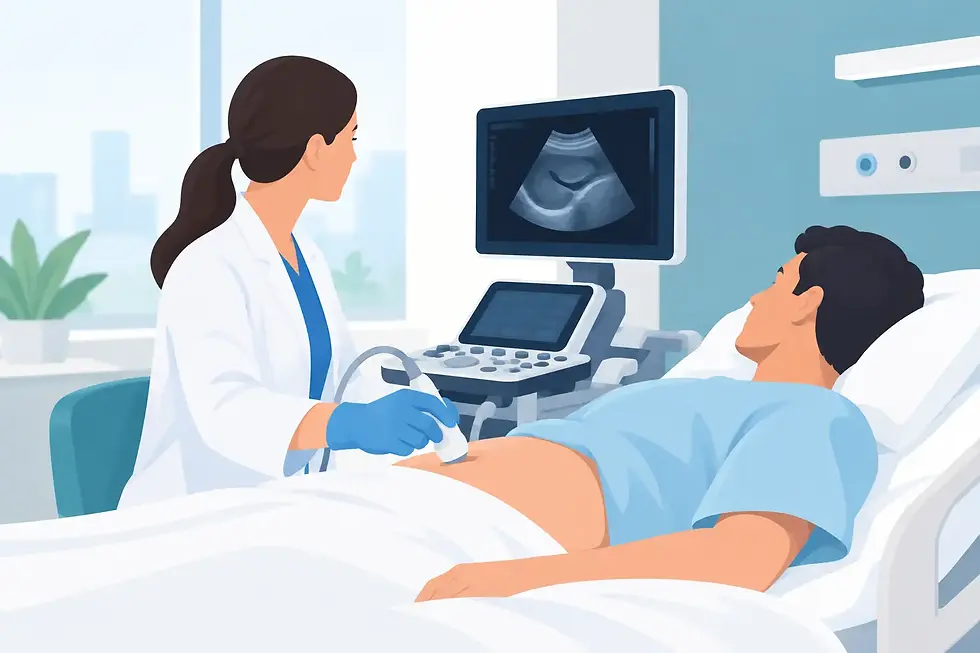
Still, many diagnostic needs fall between routine monitoring and a clear emergency. Those cases are where an on-site partner can materially improve operations. A resident with a new cough, suspected fracture after a non-emergent fall, swelling that may require vascular evaluation, or a need for an EKG may benefit from timely testing at the point of care when clinically appropriate.
The Operational Value Is More Than Transportation Savings
Transportation is often the first cost a facility notices, but it is only one part of the equation. The larger burden includes staff coordination, clinical handoffs, delayed meals or medications, family communication, resident anxiety, and the risk of a change in condition while away from the facility.
An effective mobile diagnostics program also supports continuity. The nurse who knows the resident's baseline can assist during the exam. The provider receives results tied to the clinical question that prompted the order. The care plan can be updated with less fragmentation between the facility, imaging center, transport provider, and outside appointment staff.
There are trade-offs. Not every exam can be completed portably, and image quality can depend on a resident's ability to cooperate with positioning. Open MRI, advanced imaging, or complex specialty procedures may still require an off-site setting. Mobile providers also need enough lead time, accurate order information, and appropriate access to the resident to operate efficiently. A facility should not assume that every request is appropriate for bedside service simply because it is more convenient.
The right approach is to define which common orders can be supported on-site, what turnaround expectations are realistic, and when staff should bypass mobile diagnostics in favor of emergency evaluation or a hospital-based service.
Building a Reliable Mobile Diagnostics Process
The facility in this case did not treat mobile testing as an occasional convenience. It created a repeatable process. Nursing leadership designated who could submit orders, who would receive scheduling updates, and how results would be routed to the ordering provider. Staff were trained to document clinical indications clearly rather than sending vague requests.
The facility also reviewed its most common diagnostic needs. Chest X-rays, extremity X-rays, EKGs, general and vascular ultrasounds, echocardiograms, ABI testing, G-tube verification, and laboratory blood work were frequent candidates for on-site service. Reviewing volume helped leadership choose a diagnostic partner with the appropriate modality coverage instead of coordinating multiple vendors for routine needs.
Credentialing and compliance were equally important. Facility leaders verified that their mobile provider followed HIPAA requirements, used qualified personnel, maintained applicable accreditations and certifications, and had a dependable process for image delivery and results reporting. For laboratory services, CLIA-related requirements and specimen handling procedures needed to align with the service provided.
D-RAD Mobile Imaging supports facilities with mobile diagnostic and laboratory services, digital image access, and 24/7 availability across its service areas. For a nursing facility, the practical question is not simply whether a vendor can perform an exam. It is whether that partner can respond reliably, communicate clearly with unit staff, and deliver results through a workflow the provider can use.
A Better Question for Facility Leaders
The key question is not, "Can we avoid every transfer?" Some transfers are necessary and protect resident safety. A more useful question is, "Which diagnostic needs can be addressed quickly, safely, and professionally where the resident already receives care?"
When the answer is clear, mobile diagnostics become part of a stronger care-delivery system. The resident stays in a familiar environment. Staff spend less time managing logistics. Providers receive information needed to guide the next decision. Start by reviewing the diagnostic orders that most often create transport delays, then build an on-site process that gives your clinical team a faster, dependable option when every hour matters.
Comments