


A Home Health Imaging Example That Speeds Care

A new cough in a homebound patient cannot always wait for a transportation arrangement, an open appointment at an imaging center, and a long return trip home. A practical home health imaging example shows how a clinician can obtain a diagnostic study at the bedside, review results quickly, and make the next care decision without adding avoidable strain for the patient or caregiver.
For home health agencies, hospice teams, facility leaders, and ordering providers, the value is not simply convenience. Mobile imaging can keep care moving when mobility limits, oxygen needs, fall risk, infection-control concerns, or family logistics make off-site testing difficult.
What Home Health Imaging Looks Like in Practice
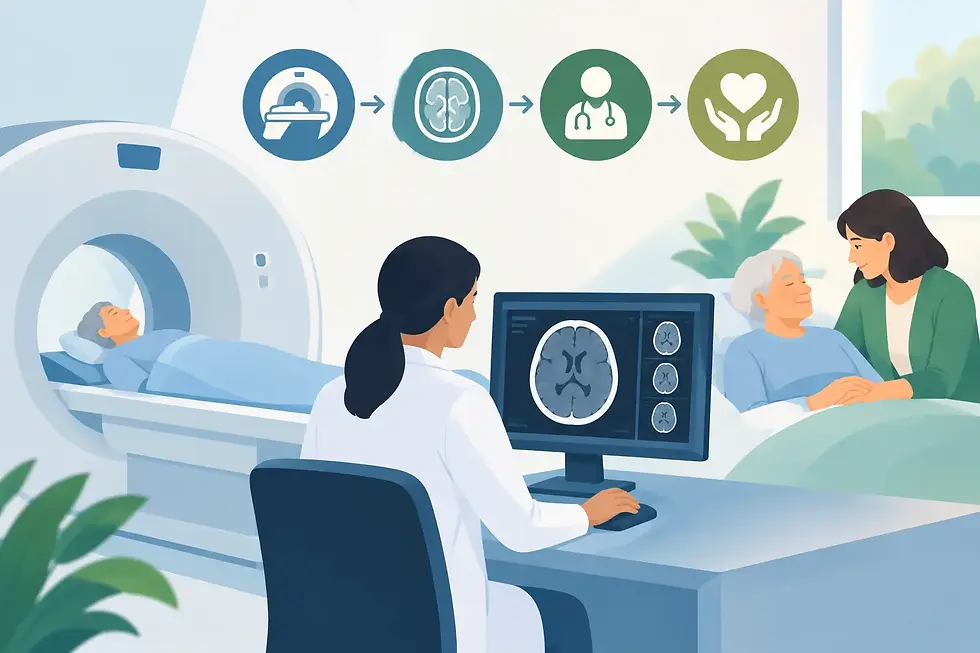
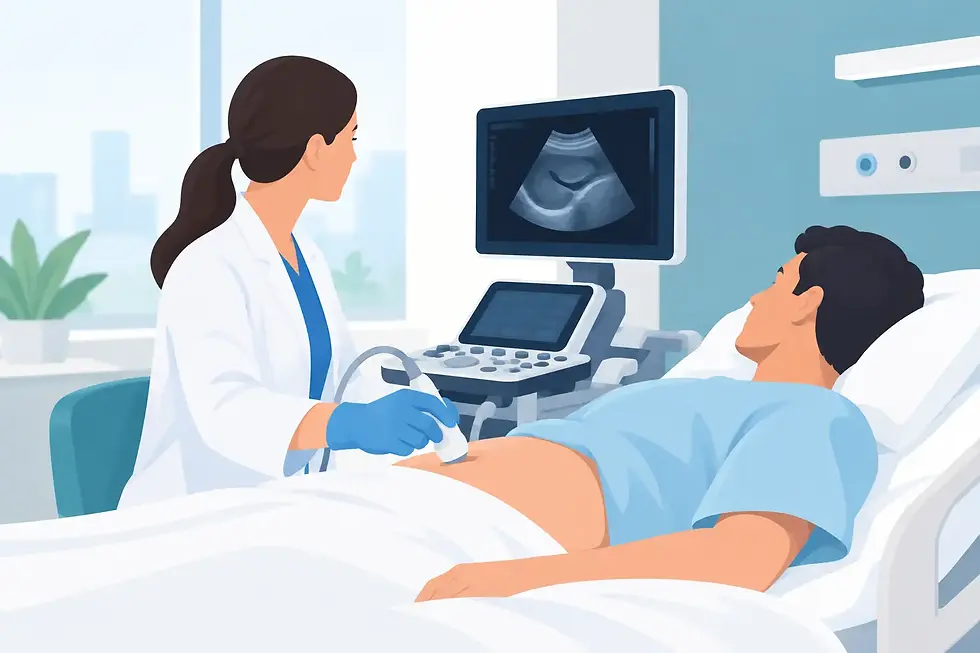
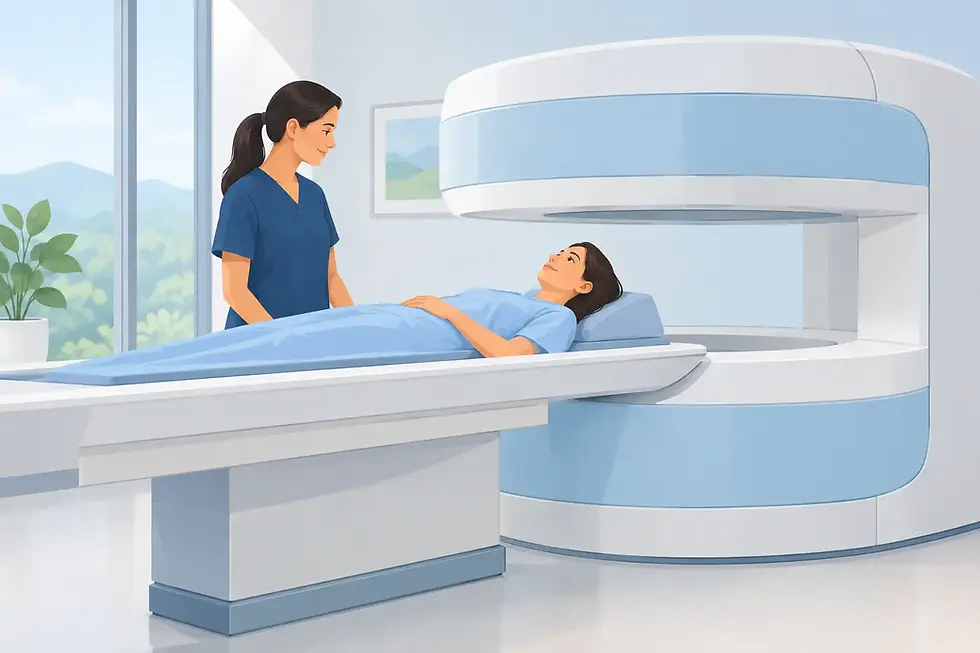
Home health imaging is diagnostic testing performed where the patient is receiving care rather than at a fixed imaging center. Depending on the clinical need and service availability, this may include digital X-rays, general or vascular ultrasound, echocardiograms, EKGs, bone density exams, ankle-brachial index testing, fundus imaging, G-tube verification, laboratory blood work, or open MRI.
The workflow should still be clinically disciplined. A licensed provider identifies the need for testing and submits a complete order. The mobile diagnostic team verifies the location, patient details, requested exam, and any preparation requirements. A qualified technologist arrives with the appropriate equipment, obtains the study on site, and sends images or data for professional interpretation when required.
The ordering provider then receives the findings through the designated reporting workflow, often with digital images available through a secure provider portal. If the result identifies an urgent concern, the patient can be directed to the appropriate next level of care without waiting for a routine office visit.
A Home Health Imaging Example: New Respiratory Symptoms
Consider an older adult receiving skilled home health services after a recent hospitalization. The patient has limited mobility, uses supplemental oxygen, and develops increased shortness of breath, fatigue, and a productive cough over a weekend. The nurse documents the change in condition and contacts the ordering provider.
The provider needs more information before deciding whether the patient can be managed at home, needs an antibiotic adjustment, or requires emergency evaluation. Sending the patient to an outpatient imaging center would mean arranging transportation, transferring the patient from home to vehicle and back, and exposing a medically fragile person to an extended trip. The logistics alone could delay the study for hours or until the next business day.
A mobile chest X-ray is ordered instead. The order includes the patient’s identifying information, the requested examination, the clinical indication, the provider’s credentials, and the destination for results. The mobile technologist performs the X-ray at the residence using portable digital equipment. The images are transmitted for interpretation, and the provider receives the report through the established reporting process.
If the report supports a non-emergent treatment plan, the provider can update medications, establish monitoring parameters, and coordinate follow-up with the home health team. If it identifies a finding that requires a higher level of care, the provider has objective information to support a timely emergency department referral. In either situation, the study shortens the time between a clinical change and a decision.
This example does not mean every patient with respiratory symptoms should remain at home for imaging. Severe distress, unstable vital signs, altered mental status, chest pain, suspected pulmonary embolism, or other emergency warning signs may require immediate emergency response. Mobile diagnostics support clinical decision-making, but they do not replace emergency care when a patient is unstable.
Why the Operational Details Matter
A mobile study is only as useful as the process around it. Incomplete orders, unclear contact information, missing insurance details, or uncertainty about where results should go can create the very delays the service is meant to prevent. Home health and facility teams benefit from having a standard ordering process before an urgent need arises.
A complete order should clearly identify the patient and requesting provider, specify the exam, state the clinical reason for the test, and include the correct location and callback information. For patients in private homes, staff should also confirm parking access, entry instructions, caregiver availability if needed, and whether the patient can safely be positioned for the exam.
For example, a provider ordering a venous ultrasound for unilateral leg swelling should indicate the affected extremity and the concern being evaluated. A vague request can require clarification and slow dispatch. The same principle applies to an echocardiogram, G-tube verification, EKG, or laboratory collection. Clear clinical context helps the diagnostic team prepare properly and helps the interpreting professional understand the reason for the examination.
Matching the Exam to the Care Question
The best home health imaging example starts with a focused clinical question. Ordering a test because a patient is difficult to transport is not enough on its own. The study should answer a question that can change or confirm the care plan.
A portable X-ray may be appropriate for suspected pneumonia, injury after a fall, persistent pain, or tube placement verification. General ultrasound can help evaluate issues such as abdominal symptoms, urinary retention, or soft-tissue concerns. Vascular ultrasound and ankle-brachial index testing may support assessment of circulation, swelling, or vascular risk. EKGs and echocardiograms can provide valuable cardiac information when a provider needs a timely evaluation outside a hospital setting.
There are trade-offs. Some conditions require advanced imaging, contrast studies, immediate specialist intervention, or hospital-based monitoring. Patient body habitus, room layout, positioning tolerance, and the specific diagnostic question can also affect whether a mobile modality is suitable. The ordering clinician should decide whether bedside testing is clinically appropriate or whether direct transfer is safer.
Results Need a Clear Owner
Fast image acquisition has limited value if no one is responsible for acting on the result. Every home health agency and care facility should define who receives reports after hours, who contacts the patient or caregiver, and who documents the next step in the plan of care.
For routine findings, that may mean notifying the provider during normal business hours and arranging follow-up. For a result that requires urgent review, the receiving clinician needs a reliable escalation path. The home health nurse, case manager, facility supervisor, and family caregiver should understand who is making the decision and what to do while waiting for instructions.
Secure digital access also improves continuity. When images and reports are available to the authorized care team, providers can compare new findings with prior studies, coordinate with specialists, and reduce repeated testing. This is particularly useful for patients who move between home health, skilled nursing, hospice, outpatient care, and hospital settings.
Building a Mobile Diagnostic Process That Holds Up After Hours
The strongest programs do not treat mobile imaging as an occasional workaround. They build it into their clinical operations. That means keeping current provider orders and contact pathways available, training staff on when to escalate symptoms, and confirming which exams can be performed at each location.
It also means choosing a diagnostic partner that can operate in the real conditions of home-based care: residential neighborhoods, assisted living communities, nursing facilities, shelters, correctional settings, and rural service areas. Availability, qualified personnel, HIPAA-compliant processes, credentialing, digital delivery, and response time should all be evaluated before an urgent order is needed.
D-RAD Mobile Imaging supports this type of field-ready workflow with on-site diagnostic and laboratory services for organizations and patients who cannot easily travel for testing. For multi-site operators, one mobile partner can also simplify coordination across home health, hospice, and facility populations.
A well-run mobile imaging process gives clinicians more than a test result. It gives them a practical way to assess change, protect fragile patients from unnecessary transport, and make the next decision with better information when time matters.
Comments